
In 1977, Gary Gilmore demanded he get the death sentence…
He committed two murders.
The Supreme Court had deemed the death penalty “cruel and unusual” and had only reinstated it the previous year;
but was yet to proclaim death on anyone for close to a decade.
However, with Gary admitting to the offense
– withdrawing his right of appeal, and requesting the court enforce the sentence ASAP –
the Supreme Court had to grant his wish.
But then came the moment:
firing squad in sight, strapped to a chair, and all Gary could pick up as his last words were …
“You know … let’s do it.”
Sounds familiar?
Well, 11 years later, Dan Wieden coined Nike’s most popular tagline…
Yea, the one that saw it move from a $877 million business to a $9.2 billion brand
… “Just do it”
In Dan’s words:
“The phrase was inspired by Gary’s final words.
I remember when I read the news … I was like, that’s amazing. I mean, how, in the face of such uncertainty, do you just push through?
So I didn’t like the ‘let’s’ thing, and so I changed that, cause otherwise I would have given him credit.”
Dan’s campaign was fundamentally about making Nike’s sneakers feel like a fashion statement to consumers.
However, when Michael Jordan and the likes were endorsed to push the tagline in a motivational way…
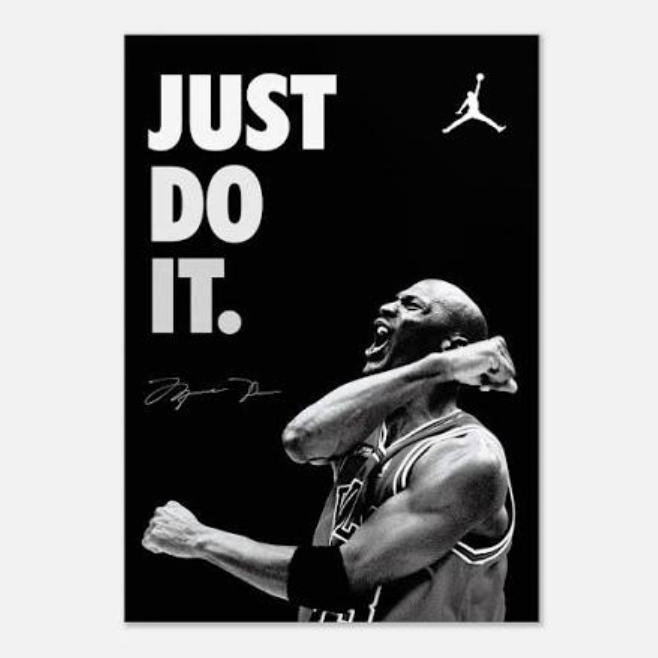
—which prompted customers to start associating their purchases with the greatness these folks had achieved—
Nike became an even bigger luxury brand.
But when I look at what most SaaS folks are doing with their listicle campaigns…
I feel pity!
I feel pity because, unlike the fashion industry, which relies on billboard ads and celebrity influencer marketing tactics…
The SaaS world allows you to shape the perception prospects have of your product through listicles and other comparative materials.
Yet, most brands can’t even identify the source of inspiration behind their comparative campaigns.
I feel pity because many SaaS marketers don’t understand how the positioning behind their brands makes prospects feel.
They’re so caught up in the “write for search” charade that they forget that …
Ranking on SERPS/AI is the same thing as being among the many sneakers on a shoe rack.
And that people won’t choose their product unless, like Nike, their brand is positioned to make them believe their tool will open doors to something bigger than themselves.
But nah!
They prefer to structure their content around search intent data …
They believe that chunking long-tail keywords and adding endless FAQs will make the bots register their brands as the best
… and automatically recommend their products.
But the poignant reality is … such is far from the case.
SaaS marketers ought to be working on their backstories.
It’s foolish to think backstories like the one Dan drew inspiration from are too far-fetched for the market …
and that prospects don’t consider such when making buying decisions.
It’s dumb to believe that having a POV
—standing by certain principles, or admitting certain biases—
might seclude a portion of the market.
And that play if you play it safe…
If you settle for generic messaging that’s either too feature-centric or outright vague,
you will someday strike gold.
I can assure you that that’s a degenerate’s errand…
And that gold rarely graces the paths of degenerates.
And on the off chance that it does, it would develop wings, as fast as it can, and spedaily fly away..
But when you spotlight your conscious belief, clear POV, and unadulterated biases…
When you tell people the inspiration behind your product and how it embodies certain bigger-than-life beliefs,
(or even how it has its way with regular, everyday ideas)
they become interested.
Sometimes to the positives, other times from a negative, but regardless, you sense the interest in their eyes,
And you walk away certain your product (or the idea of it) will linger in their minds, long enough to prompt an action.
Primarily because POVs (even one as simple as “Just do it”), when sat with, surfaces its intrinsic value.
It makes hearers want to talk about it; intrigues listeners, and excites wonder in the minds of passers-by.
Wrapping up
Gary Gilmore might have been a murderer and probably deserved the death sentence.
But the belief he held on to as he approached the chair didn’t leave the disgusting aftertaste one would expect from a murderer’s death.
Aside from inspiring the “Just do it” campaign, Gary’s death also led to
- Norman Mailer’s nonfiction novel, The Executioner’s Song,
- and the 1982 TV adaptation of the novel.
And that’s because, as humans, we are always
—in the subtlest of ways and even in the worst of scenarios—
looking for sources of inspiration; anything to excite wonder and help us embrace our highest self, better.
Why not enrich and build your software around such POVs?

- Why Your Comparative Listicle Campaign Failed - 21/08/2026
- An A to Z of my creative weaknesses - 20/08/2026
- What’s Relato & Who is it For? A Narrative Overview (2026) - 19/08/2026